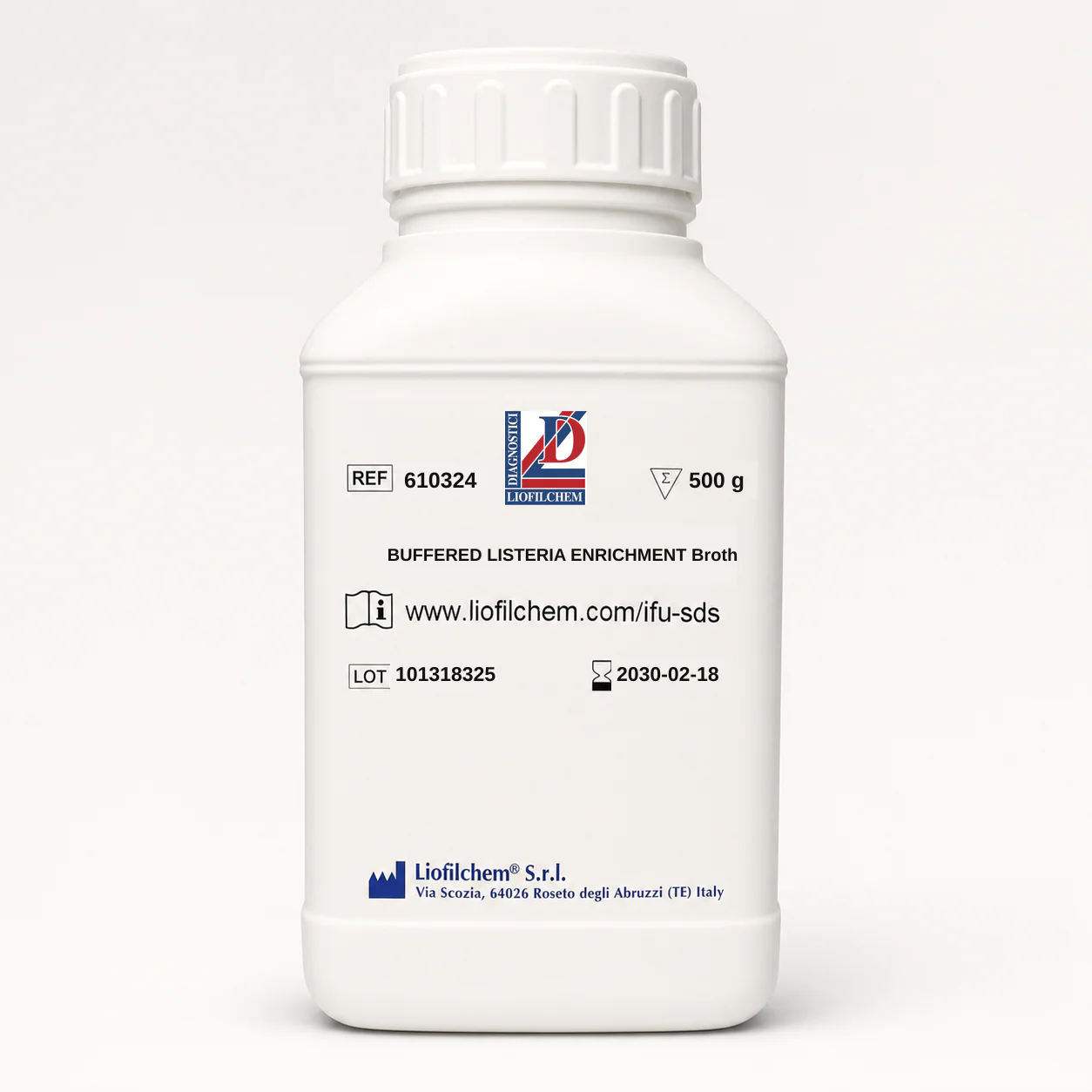
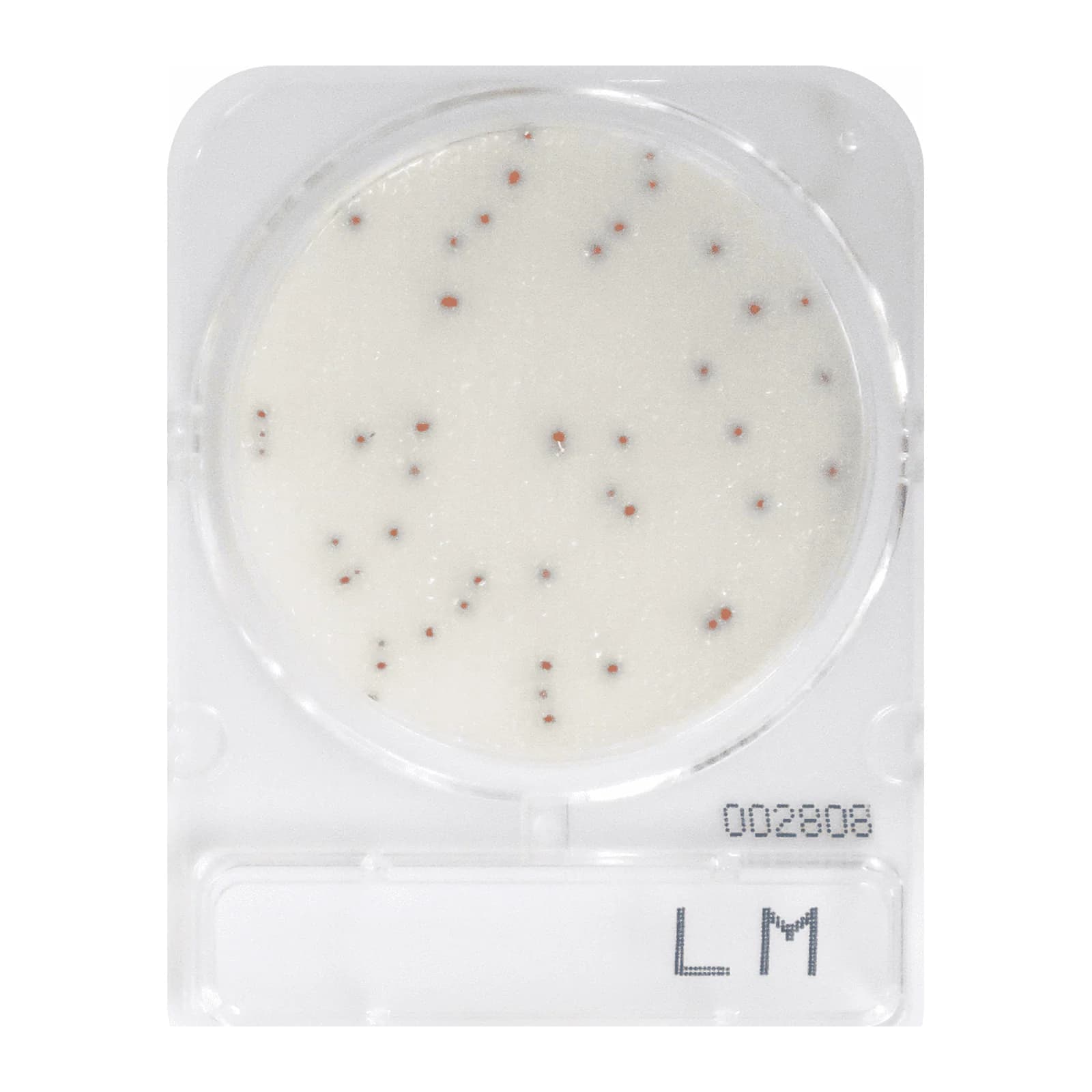
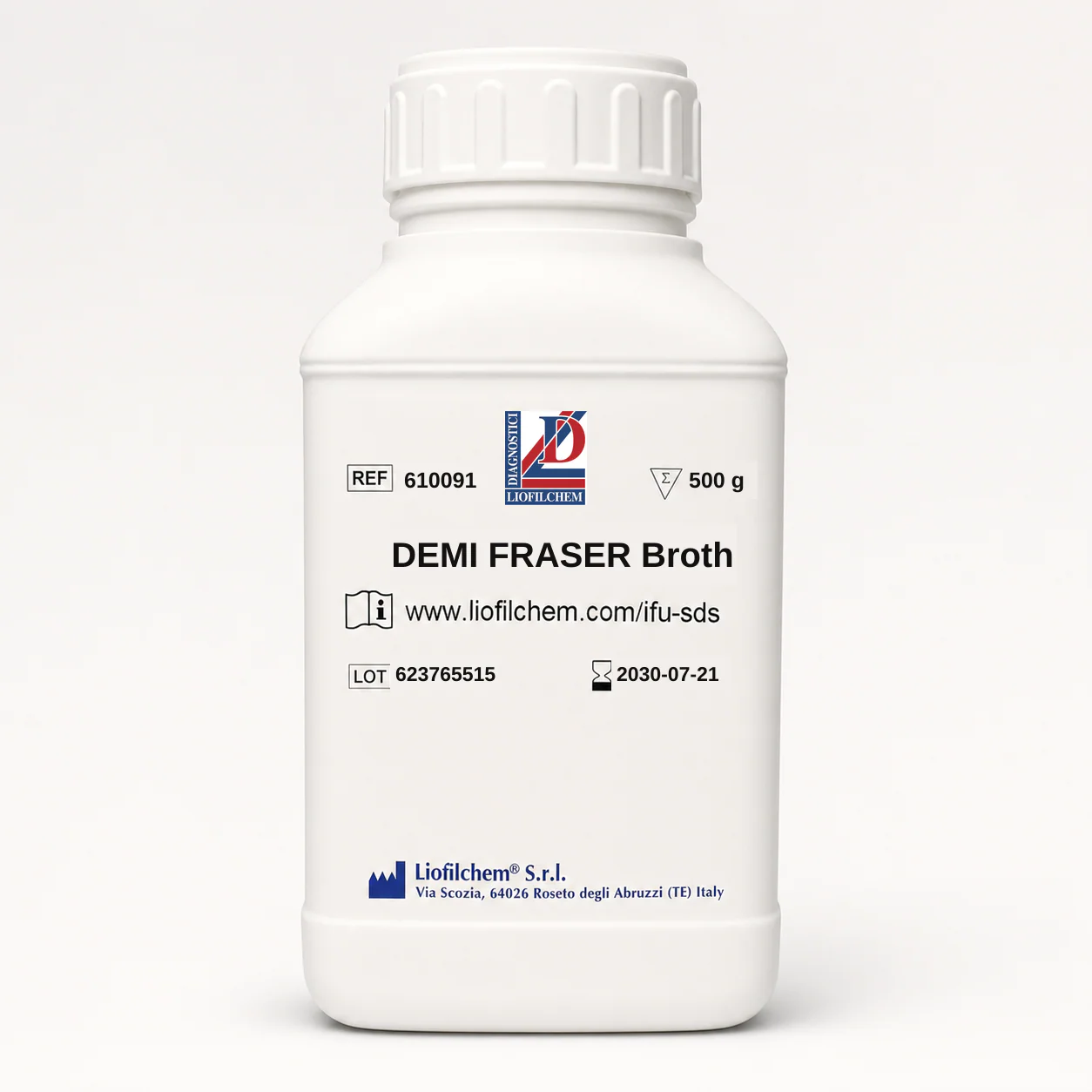
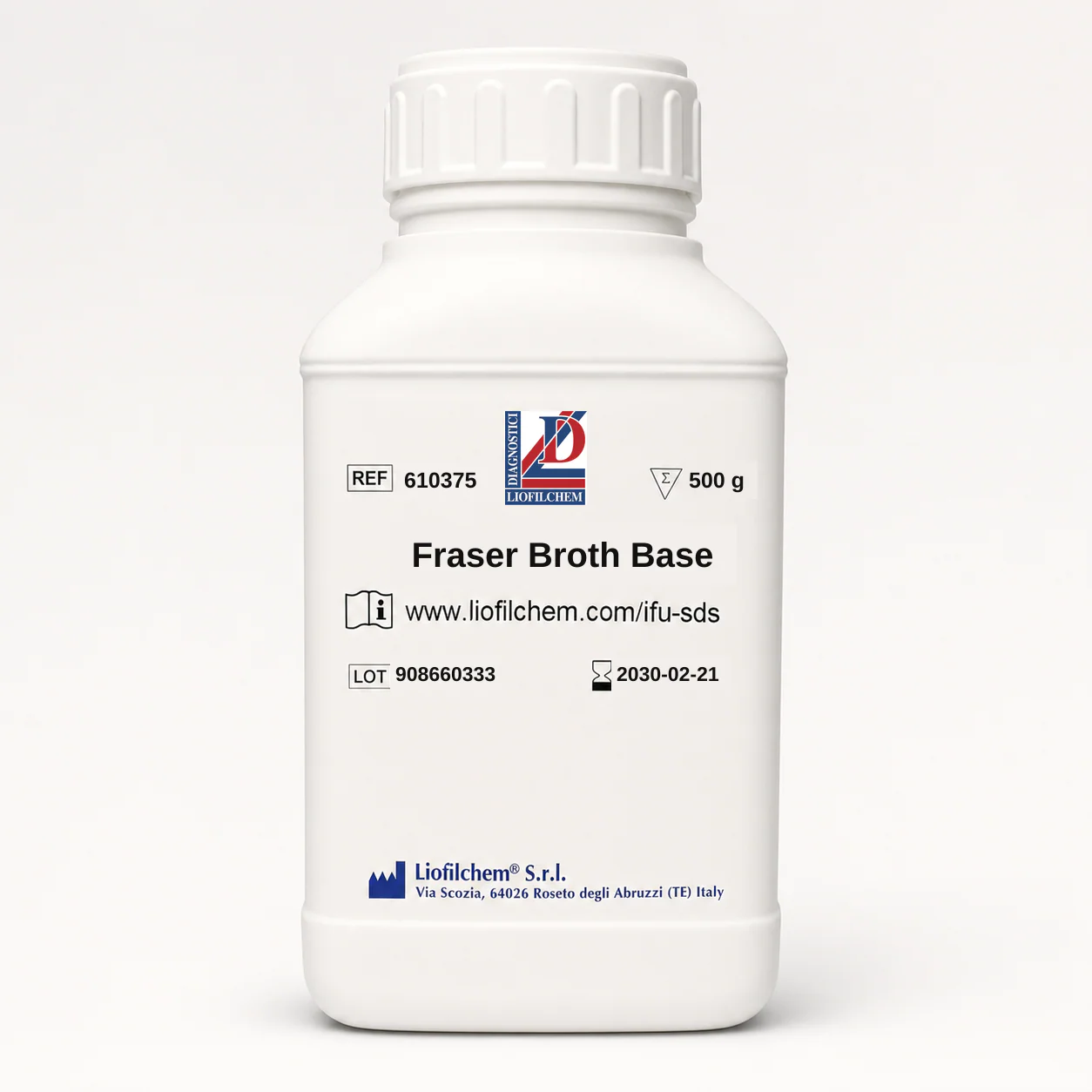
Product Images will be uploaded soon
RapidREF 4323410205
Send us a specification — most quotes answered within a few hours.

Listeria monocytogenes carries the highest stakes of any organism on a ready-to-eat line — it grows at refrigeration temperature, persists in the plant environment, and a positive on a finished product is rarely a single-batch problem.
 Blue-green colonies with halo · chromogenic agar
Listeria is unusual among food pathogens because it grows at refrigeration temperature. Chilled storage, which controls most organisms, does not control this one — which is why ready-to-eat products with extended shelf life carry the strictest requirements, and why the organism is a persistent concern in dairy, chilled meats and prepared foods.
The greater operational risk is environmental. Listeria establishes itself in drains, floor junctions, and hard-to-clean equipment, and re-contaminates product from there. A finished-product positive usually indicates a harbourage site, not a one-off event, which is why environmental monitoring carries as much weight as release testing in a credible Listeria programme.
Detection is complicated by the need to distinguish L. monocytogenes from other Listeria species that share the same selective media. Chromogenic media resolve much of that, but confirmation remains the step that makes a positive defensible — and the step regulators scrutinise.
Detection, differentiation and confirmation — where each method fits.
Two-stage selective enrichment followed by isolation on chromogenic agar, where L. monocytogenes is differentiated from other Listeria species by its opaque halo.
Time to result4–5 daysReady-to-use chromogenic formats sized for the volume of swabs and contact plates an environmental monitoring programme generates every week.
Time to result24–48 hReal-time PCR distinguishing L. monocytogenes from other Listeria species with high specificity — valuable when a presumptive positive is holding product.
Time to resultSame day, post-enrichmentEnvironmental programmes lean on throughput; release testing leans on confirmation.
Ask usA selection spanning culture media, rapid formats and molecular assays. The full range is in the catalogue.
The references a Listeria programme is measured against.




Tell us your matrix and how fast you need a release decision — we'll recommend the method and respond with pricing, availability and lead time.