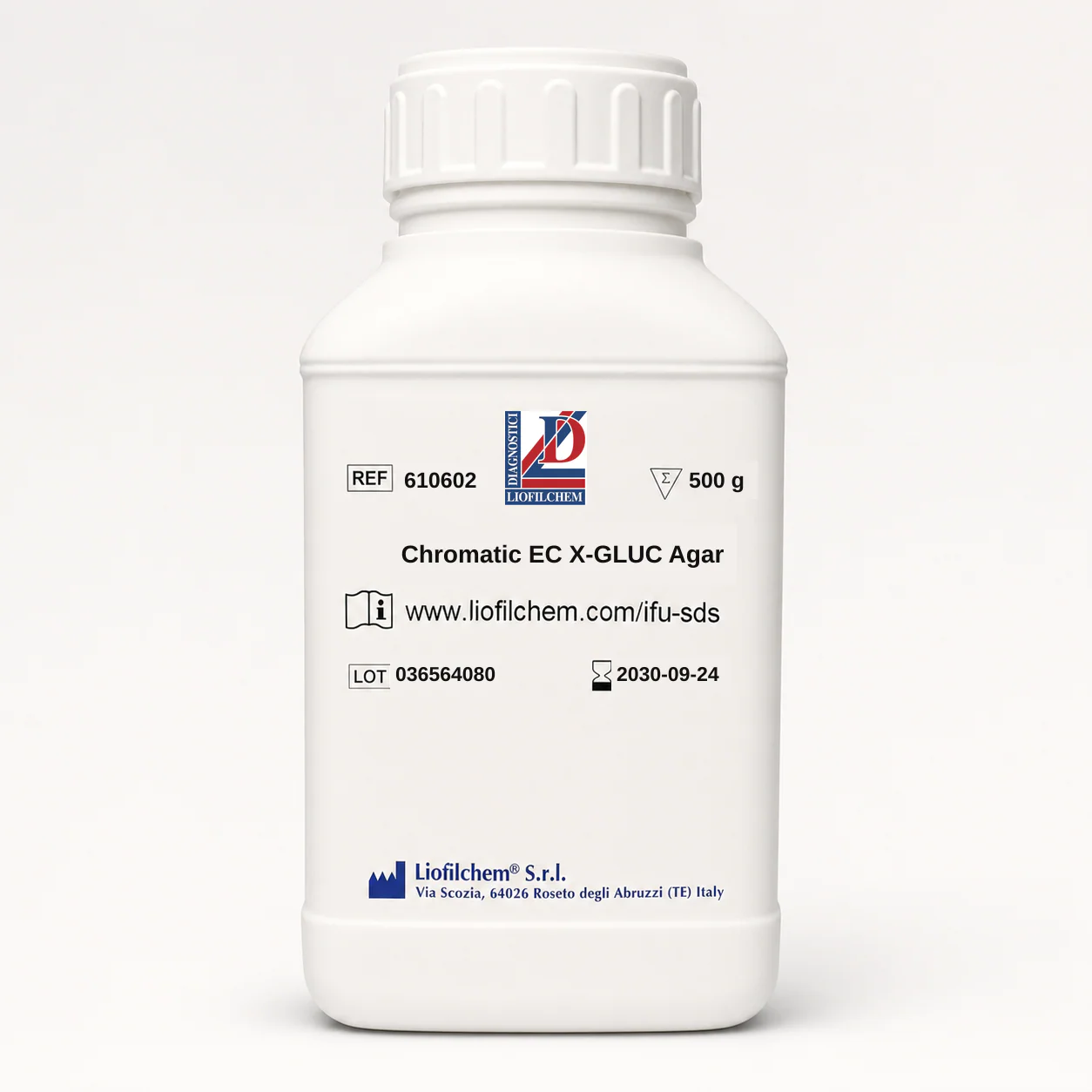
Product Images will be uploaded soon
MolecularREF 5123222701
Send us a specification — most quotes answered within a few hours.

E. coli sits in two roles at once — a faecal indicator that signals process hygiene failure, and, in its pathogenic serotypes, a hazard in its own right. Which role you are testing for changes the method entirely.
 Indigo-blue colonies · chromogenic agar
Most routine E. coli testing is indicator testing: its presence signals faecal contamination and, by extension, a failure somewhere in process hygiene or water quality. In that role it is enumerated rather than merely detected, and the count itself is the result that matters.
The separate and more serious case is pathogenic E. coli — O157:H7 and other STEC serotypes — where the requirement is absence rather than a count, and where the testing workflow resembles Salmonella more than it resembles indicator enumeration. Conflating the two is a common source of specification error.
For the indicator role, chromogenic media have largely replaced older confirmation-heavy workflows: β-glucuronidase-based substrates give a countable, visually unambiguous result at 24 hours. For the pathogenic role, enrichment followed by molecular confirmation is the practical route, because the detection level required is far below what direct plating resolves.
Indicator enumeration and pathogen detection are different problems — these are the routes to each.
TBX Agar, MacConkey Agar and Chromocult Coliform Agar are commonly used to screen, differentiate and enumerate E. coli in routine culture-based testing.
Time to result24 hReady-to-use plate formats for high-volume routine enumeration, removing media preparation from the workflow while keeping the count comparable to reference methods.
Time to result24 hReal-time PCR for pathogenic serotypes after enrichment, where the requirement is absence at low levels rather than a count.
Time to resultSame day, post-enrichmentConfirm which role your specification means before selecting a method.
Ask usA selection spanning culture media, rapid formats and molecular assays. The full range is in the catalogue.
The references an E. coli programme is measured against.




Tell us your matrix and how fast you need a release decision — we'll recommend the method and respond with pricing, availability and lead time.